Nation Branding
Identity, image and reputation

A thesis on how the value of a territory is built.
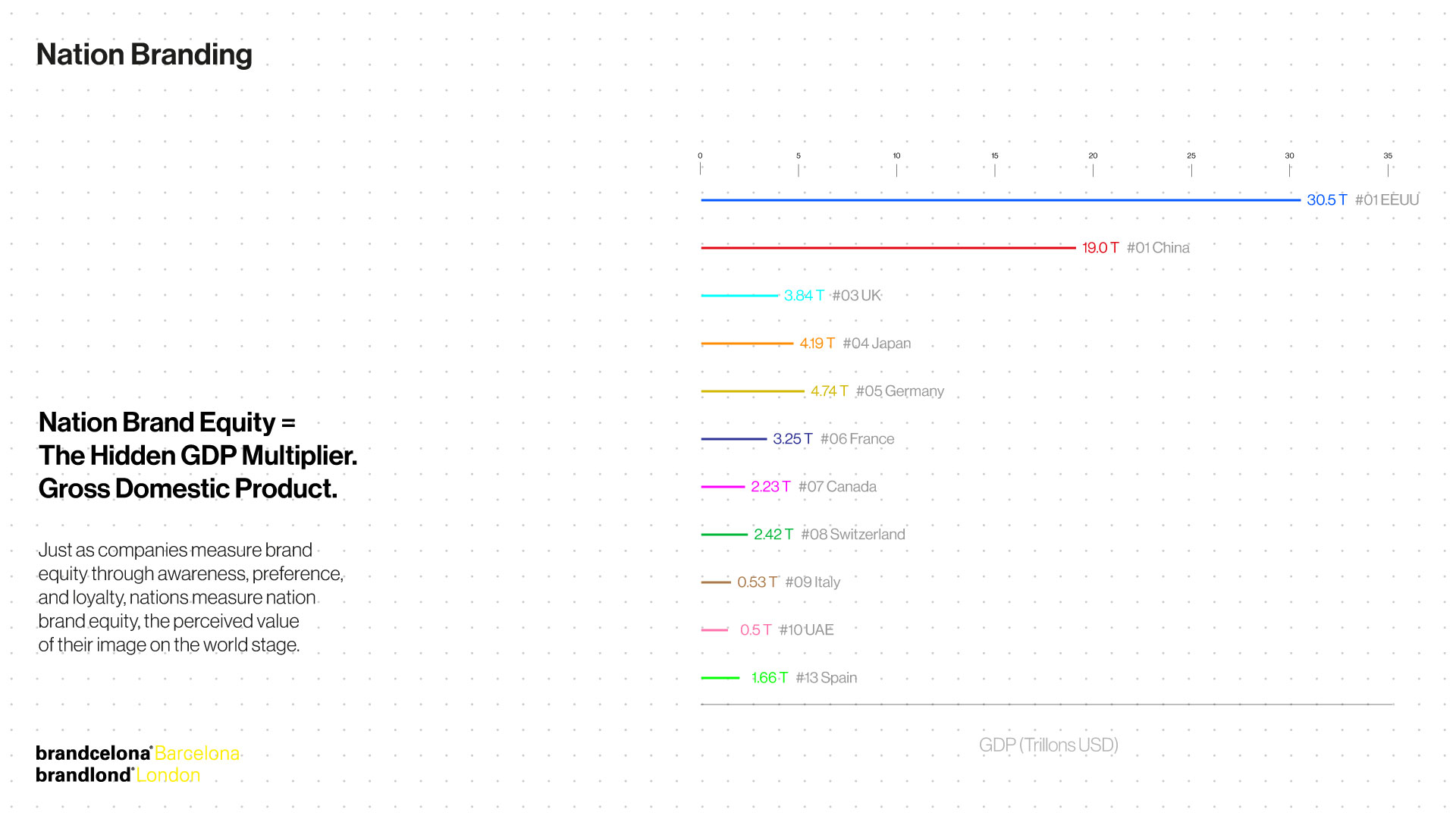
A territory’s reputation is not a consequence of what it does, but the accumulated result of what it decides to sustain. That is the thesis that runs through Best Nation Branding and the one that organises this report: the country brand is a strategic decision, not a by-product of economic, cultural or diplomatic activity. What the world believes about a territory measurably conditions its ability to attract investment, talent, tourism and diplomatic relevance, and its management therefore belongs to the realm of strategy rather than communication.
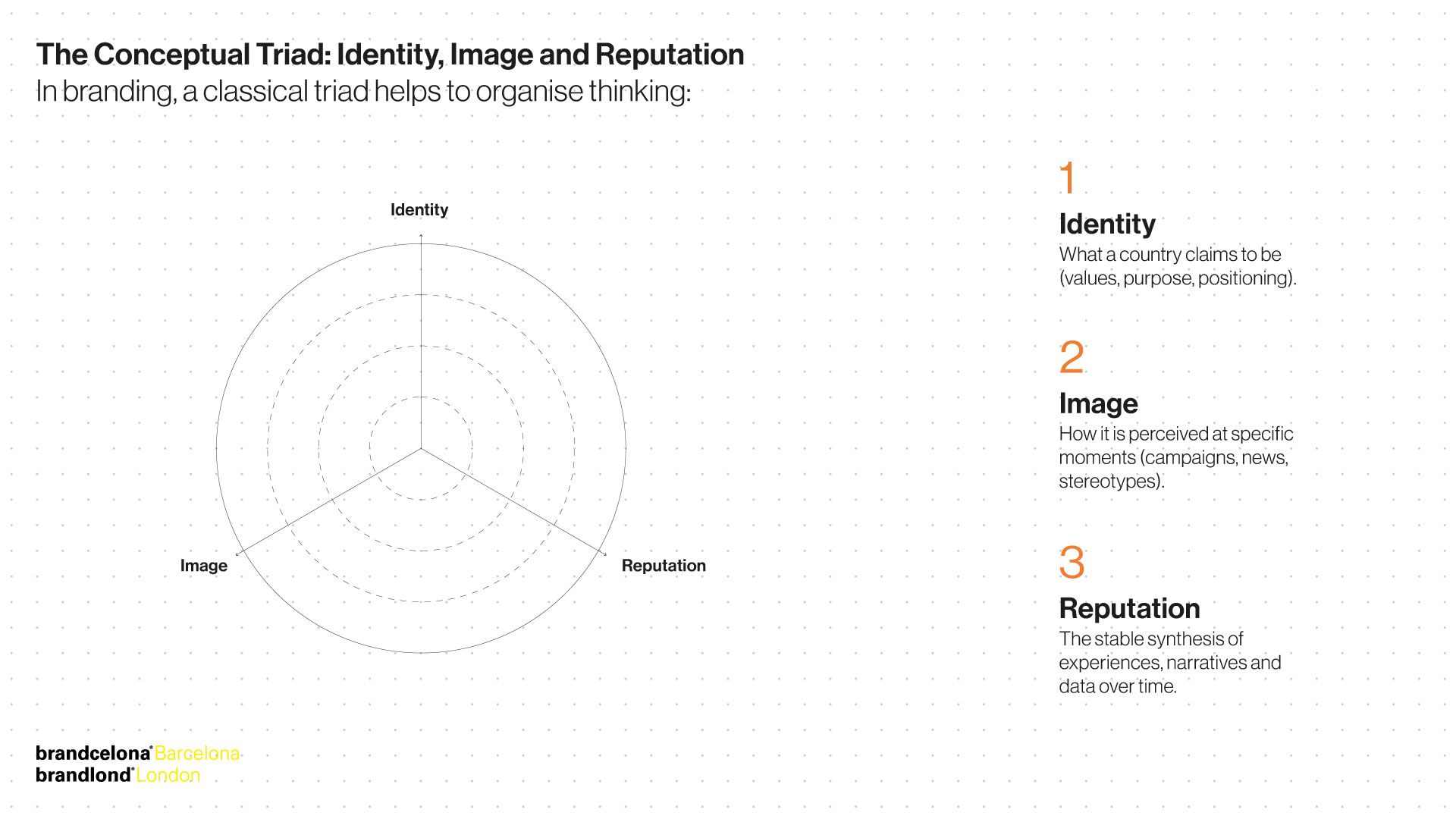
The conceptual framework starts from a basic distinction between three levels that are often confused. Identity is what a territory claims to be; image is how it is perceived at a given moment; and reputation is the stable synthesis that consolidates over time from experiences, narratives and data. There is a distance between identity and reputation, and that distance is the real object of the work: where the promise exceeds reality there is a problem of credibility, and where reality outstrips perception there is a problem of positioning. Understanding the country brand is, in essence, learning to measure and close that gap.
From this logic, we adopt an argumentative and strategic approach, deliberately distanced from the individual case and the anecdote. Each section develops an idea about how reputational value is built (the hierarchy between branding and marketing, the brand as a system of meanings, coherence across dimensions and experience as proof of the promise). The purpose is not to describe what particular territories do, but to offer a way of thinking about reputation as an asset that is decided, sustained and demonstrated.
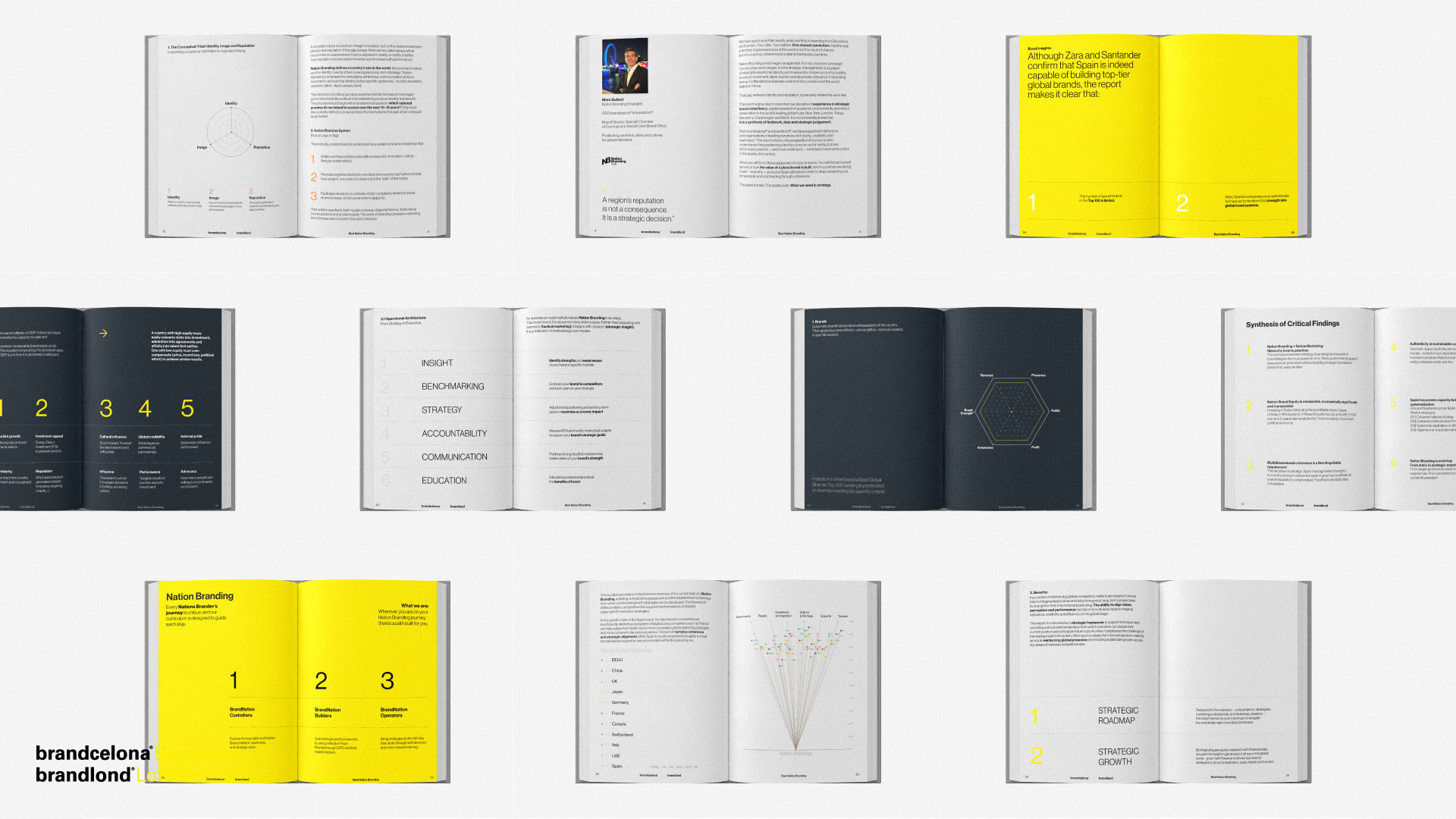
The eight ideas that follow are the main arguments of our report and represent a strategic roadmap:
1. Communicating is not positioning
The most widespread error in managing territorial brands is the inversion of the hierarchy. Action is taken on visibility before the foundation has been defined, and the intensity of communication is mistaken for the strength of positioning. A campaign can generate attention; only a strategy generates meaning.
The distinction is one of nature and time horizon. Branding defines the role a territory aspires to play and the promise it is willing to sustain for a decade or more. Marketing activates that promise before specific audiences at specific moments. Without the former, the latter is noise; with the former, the latter gains direction.
2. Three concepts, three timeframes
The triad of identity, image and reputation organises thinking because it separates what is declared, what is perceived and what is consolidated.
- Identity: the intention. What a territory claims to be through its values, its purpose and its positioning.
- Image: the perception of the moment. What is seen at a given point, shaped by current affairs, dominant narratives and stereotypes.
- Reputation: sedimentation. The stable synthesis of experiences, narratives and data accumulated over time.
The consequence is methodological: reputation is not managed directly. It is built indirectly, by working on identity and on the coherence between what is promised and what is done. Anyone who tries to manufacture reputation without intervening in what sustains it produces only image.
3. The gap as the unit of work
The real object of brand consultancy is not image in isolation, but the distance between identity and reputation. That gap admits two opposing diagnoses, and confusing them leads to mistaken strategies.
If the promise exceeds reality, the problem is one of credibility and the response is to adjust the discourse or transform the practice. If reality exceeds reputation, the problem is one of perception and the response is to synchronise the narrative with performance. In both cases, the strategic task is to close the distance, never to disguise it.
4. The brand as a system of meanings
From a theoretical perspective, a territorial brand works as a system of shared meanings that orders associations, offers cognitive shortcuts and eases decisions in highly complex contexts. Those who must choose where to invest, study, settle or travel do not evaluate each piece of data from scratch: they trust, or do not trust, the territory’s seal.
Hence reputation operates as a transaction cost. The weaker it is, the more effort a territory must invest to be believed; the stronger it is, the more easily it converts attention into investment, admiration into agreements and affinity into talent that stays. The brand does not create wealth on its own, but it amplifies or limits the capacity to capture it.
5. Multidimensional coherence as a condition
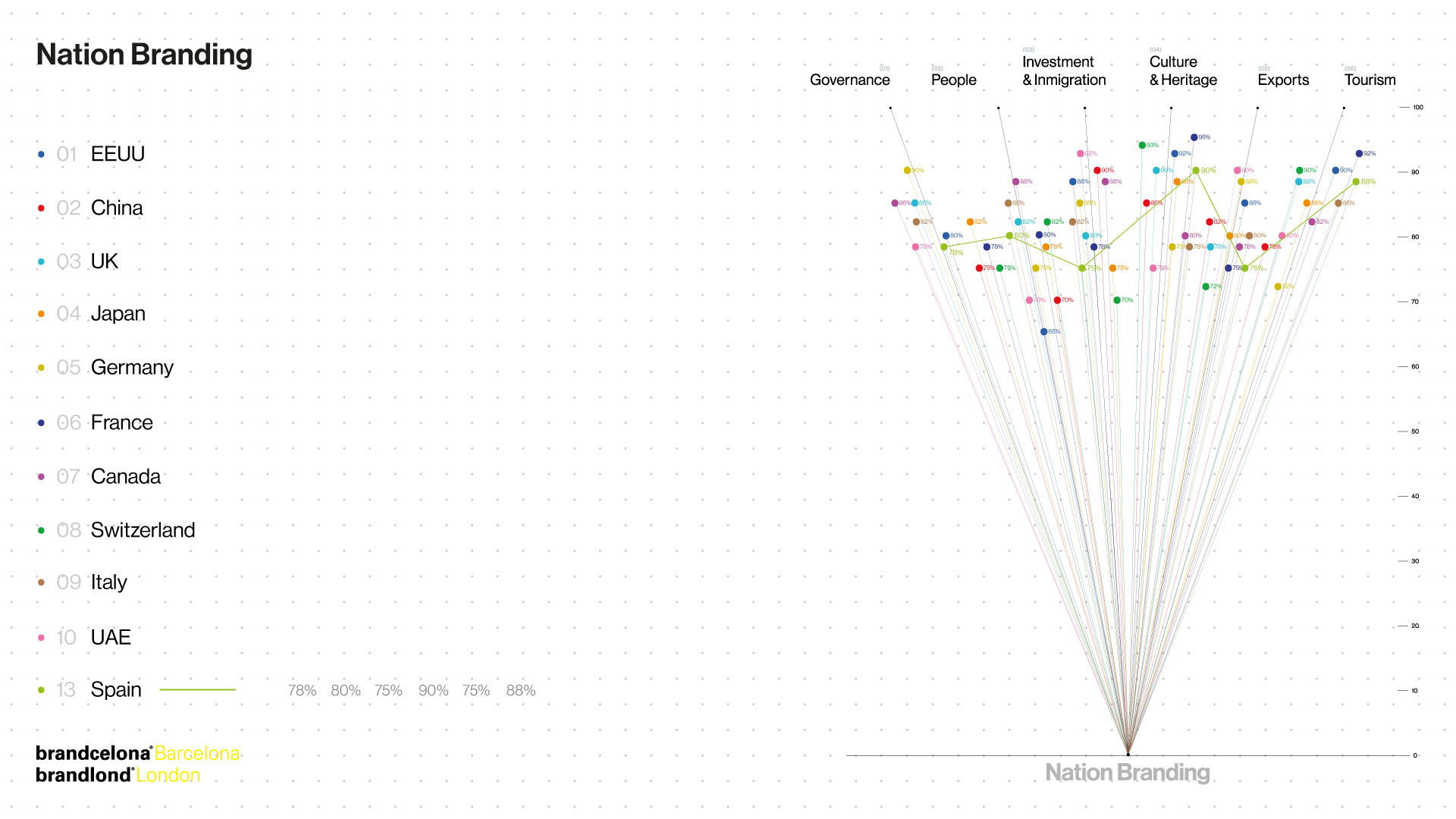
Territorial brands are not made up of a single dimension, but of several that compete simultaneously: governance, people, investment and mobility, culture and heritage, exports and tourism. Their effect is multiplicative, not additive. An extraordinary strength in one of them does not offset a structural weakness in another; the weakest dimension conditions the whole.
The strategic implication is clear: coherence weighs more than isolated excellence. An ambitious narrative that finds no backing in the institutional framework loses persuasive power, whereas a modest narrative aligned with reality gains credibility over time. Authenticity is, moreover, a form of competitive defence: what is invented does not withstand scrutiny.
6. Experience as proof of the promise
A territorial brand is verified through contact. The promise is confirmed or refuted in every interaction with institutions, in the behaviour of citizens, in public communication and in the activity of private organisations, which act as silent ambassadors, for better or worse.
That is why friction is a brand problem and not merely a management one. When real experience contradicts the discourse, the territory loses brand equity. And that is why all these vectors must point in the same direction: the brand does not live in the message, it lives in the sum of the experiences that confirm it.
7. Measuring in order to decide
Reputation indices combine objective data with subjective perception and function as proxies: they do not capture the whole of reality, but they offer a comparable baseline and make it possible to observe trends. Their strategic value lies not in the position they confer, but in the questions they force us to ask: what has been done, or left undone, to move in a given direction.
Hence the methodological order proposed by the report: first insight, then comparison, then strategy and accountability, and only at the end communication. Methodology before impulse.
8. Where the discipline is heading
The practice of nation branding is shifting in three directions. From the single narrative to value coalitions, because influence is no longer organised solely around the national, but around shared challenges and principles. From the static symbol to experience, because participation and emotion replace exposure. And from promotion to the defence of one’s own narrative, because in an environment saturated with other people’s stories, preserving authorship of identity is also a strategic matter.
Conclusion: strategy first
Building a territorial brand demands three commitments that no campaign can replace: defining a promise with a long horizon, aligning all the vectors that sustain it, and maintaining that coherence beyond political cycles and the urgencies of communication. Reputation is neither improvised nor bought; it is decided, sustained and demonstrated.
If identity is the intention, image is the perception and reputation is the consequence, then the work of branding is to make the three speak the same language. That is the difference between competing out of necessity and leading through coherence.